
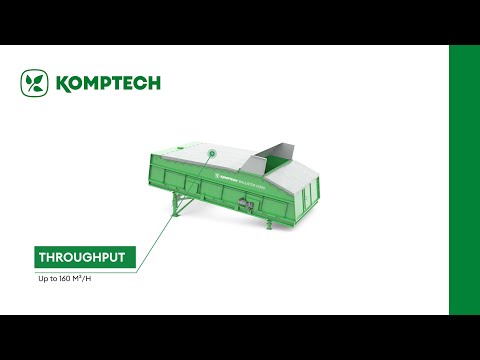
Ballistor Separator
POA
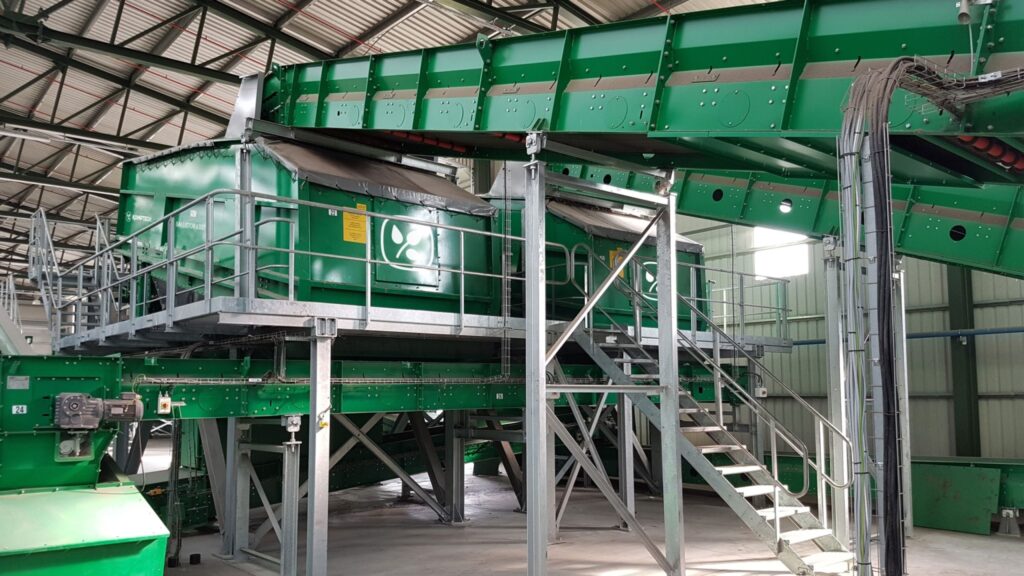
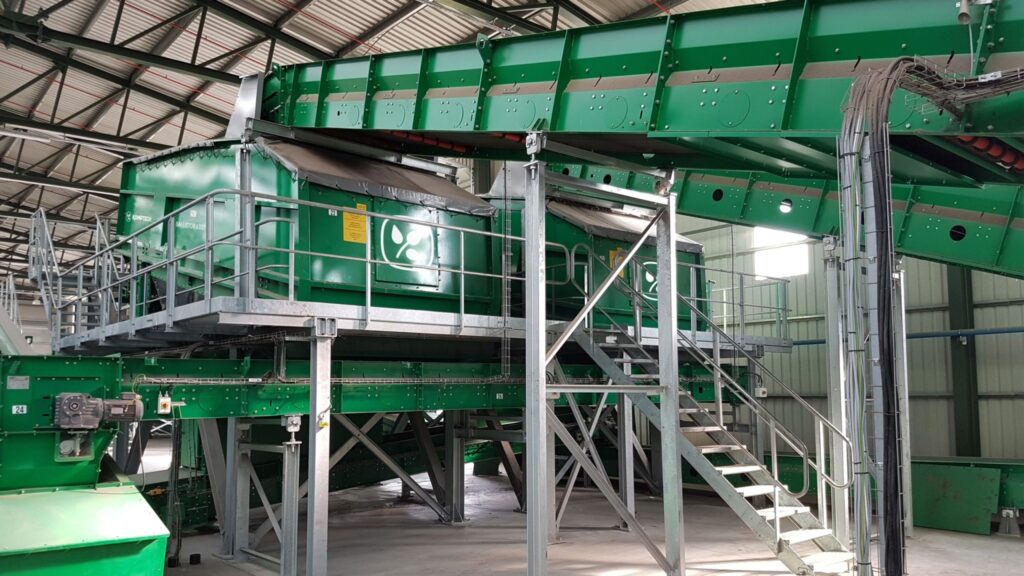
A Komptech ballistic separator is a waste processing machine that uses a combination of screening and a ballistic, elliptical paddle movement to separate waste streams into three fractions: two-dimensional (2D), three-dimensional (3D), and fines. This system efficiently sorts materials like construction and demolition waste, municipal solid waste, and organic waste, making downstream sorting by hand or robot more efficient and significantly reducing the labor needed. It increases the recovery rate of valuable materials while lowering the amount of waste sent to landfill.
The Ballistor separates out usable fractions from waste and potential recyclables. By combining ballistic separation with screening, in just one pass-through the material stream is separated to the criteria 3/2-dimensional, rolling-cubic-rigid/ flat-soft-narrow, and particle size. This means that high-caloric fractions can be separated out of commercial or household waste and further processed into RDF in one operation.
The Ballistor’s long-life components, readily replaceable wear elements, and excellent maintenance access keep operating costs low. With four sizes and many options, the Ballistor separator can be configured to suit the application.
RANGE
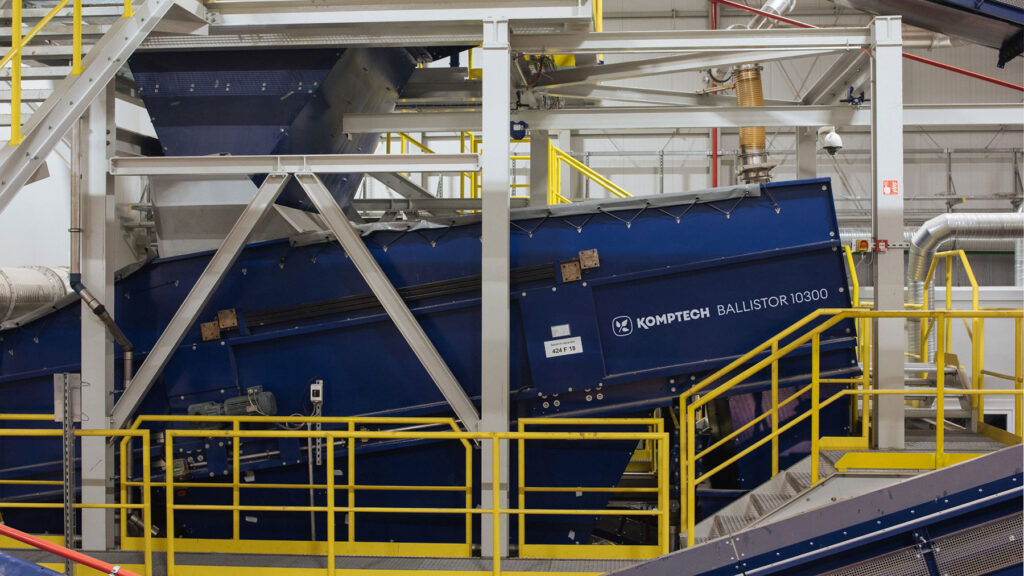
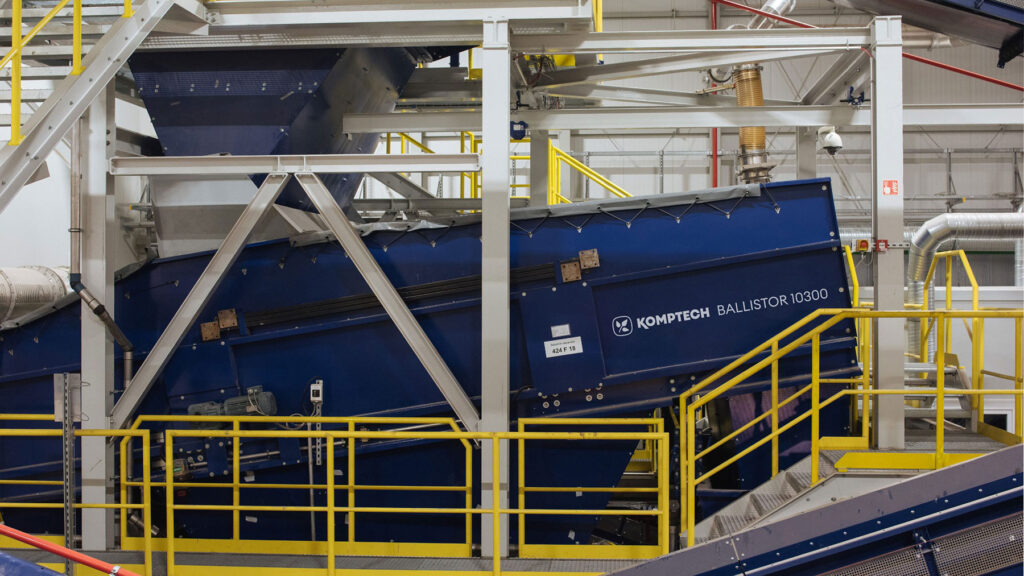
The Komptech Ballistor range includes models like the Ballistor 4300, 6300, 8300, and 10300, with power ratings from 5.5 kW to 11 kW and maximum throughputs from 60 m³/h to 160 m³/h, depending on the model and material. The range offers various configurations and screening areas to suit different applications in waste and recycling separation.
| Model | Power (kW) | Max. Throughput (m³/h) | Screening Area (m²) |
| Ballistor 4300 | 5.5 | up to 60 | 9.6 |
| Ballistor 6300 | 5.5 | up to 100 | 14.4 |
| Ballistor 8300 | 11.0 | up to 130 | 19.2 |
| Ballistor 10300 | 11.0 | up to 160 | 23.9 |
The Komptech Ballistor is a ballistic separator that combines ballistic separation with screening to efficiently sort mixed waste materials into three distinct fractions:
- 2-Dimensional (2D) fraction: Light, flat, and flexible materials like film, paper, and cardboard. These materials “walk” up the inclined paddles.
- 3-Dimensional (3D) fraction: Heavy, rigid, and cubic items such as bottles, cans, and stones. These materials bounce and roll downwards.
- Fine fraction: Smaller particles that fall through the adjustable holes in the screen paddles.
How it works
- Input: Waste is fed into the machine, often after being pre-treated by shredding or preparation.
- Separation process:
-
- A feeder spreads the material across the separator’s surface.
- Paddles move in an elliptical pattern, pushing lighter, flat materials forward (“2D fraction”).
- Heavier, rigid items are pushed to the back, along with the fines that fall through screen openings (“3D fraction”).
- Output: The waste stream is divided into three distinct fractions, ready for further processing.
Key benefits
- Increased efficiency: Reduces the number of sorters required, which can eliminate 40-60% of a sorting line’s headcount.
- Improved material recovery: Separates valuable materials, increasing the recovery rate of recyclables.
- Reduced landfill waste: Customers have seen their landfill residuals decrease from 40-50% to over 80%.
- Versatility: Can be used for a wide range of materials, including construction and demolition waste, municipal solid waste, and organic waste.
- Lower operating costs: It is an energy-efficient and robust machine that requires low maintenance.
Applications
- Construction and Demolition (C&D) waste
- Municipal Solid Waste (MSW)
- Organics and food waste
- Single-stream recycling
Key Features and Applications
- Working Principle: The separation is achieved by the oscillating movement of inclined paddles. The speed and angle of the paddles can be adjusted to optimize the sorting process for different material streams.
- Materials Processed: The Ballistor handles a wide range of waste, including municipal solid waste (MSW), commercial waste, single-stream recyclables, and construction and demolition (C&D) debris.
- Benefits: It improves the efficiency of downstream sorting by reducing the burden on sorting belts and separating high-calorific value materials for use as refuse-derived fuel (RDF) or reclaiming high-purity recyclables like polypropylene.
- Design: It features a robust design with a low-energy electric drive system, long-life components, and easily replaceable wear parts, which helps keep operating costs low.
- Configuration: The system is available in several sizes and can be configured as a stationary or mobile unit to suit specific operational needs.
UDC Finance available – Find out more
No specifications available for this product.